
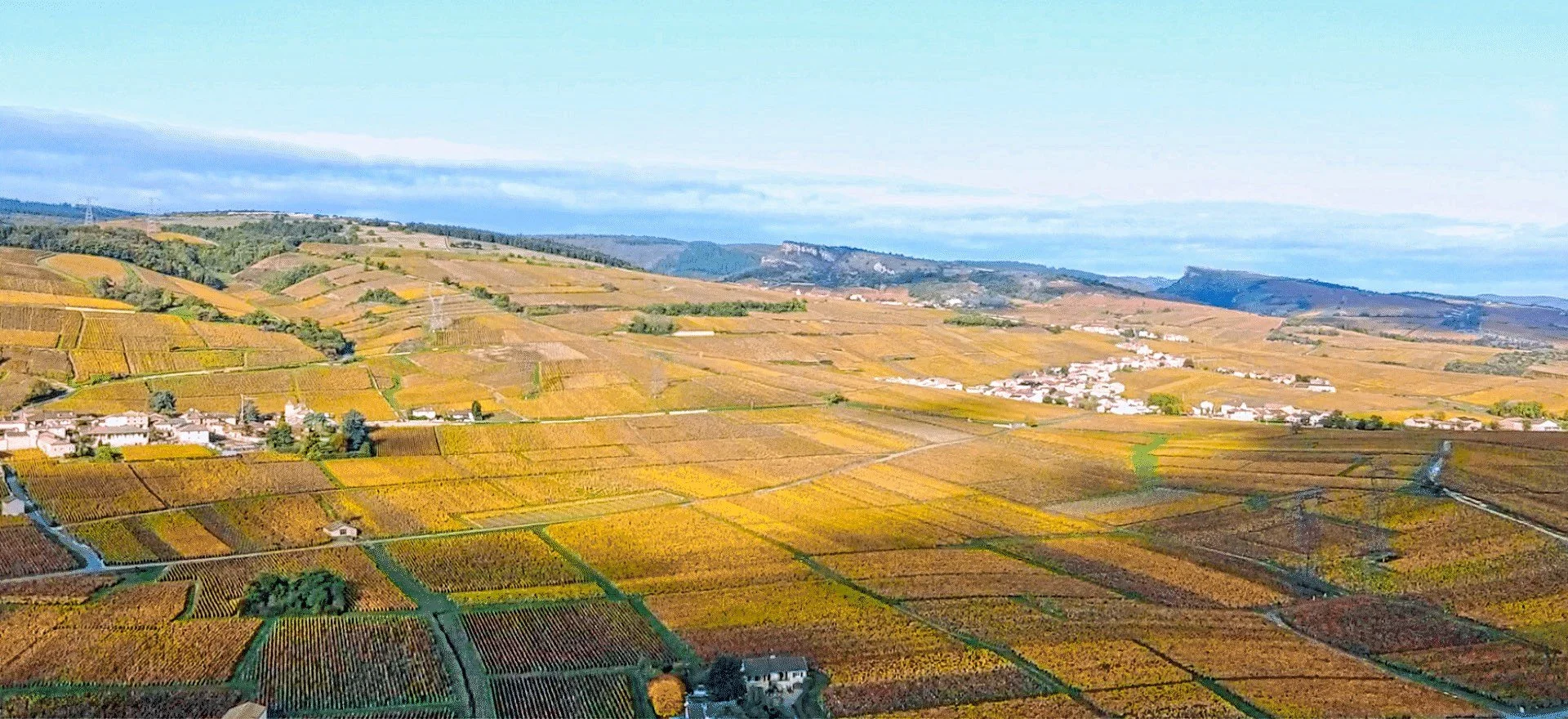
Marcel Couturier Burgundy, France.
Established: Many generations farming and growing vines in the Macon with grapes sold to cooperatives until 2005 when wines first sold under Marcel Couturier label.
Appellations:
AOC Mâcon - and related appellations
AOC Pouilly-Fuissé - and related appellations
Proprietor: Couturier family
Winemaker: Auxence Couturier
Wine Making Overview: All wines are hand harvested and vinified with indigenous yeast and without SO2 and aged in oak barrels, exclusively from French forests. Wines remain in barrel mostly for about 11 months before bottling with small safe addition of SO2.
Average Production: 5 500 dozen
Viticulture: Certified Organic; Certified Biodynamic (Ecocert and Demeter)
Vegan Friendly: Yes
Vineyard Area: 12.5 ha (100% Chardonnay)
Vineyards: holdings located in 8 different appellations in the following sites
Mâcon
Mâcon-Loché
Mâcon-Fuissé
Saint-Véran
Pouilly-Loché
Pouilly-Fuissé
Vine Density: 5 000/ha
This first report includes plenty of old friends and an excellent newcomer to me, Domaine Marcel Couturier. Jasper Morris M.W. January 2026
While the previous generation had been supplying their grapes to the cooperative since 1985, Marcel Couturier decided it was time to start bottling some of his own wines – building a cuverie where the domaine is now situated, high on the hill at the confluence of the Pouilly-Fuissé, Pouilly-Loché and Pouilly-Vinzelles appellations. The first vintage was 2005 with steady expansion, as more vineyards were retrieved from the cooperative, and further land was planted up, rented or purchased. The domaine had expanded to 7ha by 2010, with the cuverie being extended in 2014 in anticipation of the arrival of the next generation, the recuperation of the remaining family vineyards., and arriving at 100% domaine bottling.
Auxence joined his father in 2017 and is now responsible for vinification, as well as overseeing first organic (2021) and then biodynamic (2022) certification. His sister Cladie has been working with him since 2019. They have taken the domaine in a striking direction, about which Auxence is extremely articulate. They use their own compost in the vines, and are keen on careful hoeing and debudding. The canopy is a little higher than usual. They use much less new wood than their father used to. An impressive first visit. Jasper Morris M.W. January 2026
There is notable diversity of soil types in this area with soils not only of limestone and clay but also sandstone and schist, all due to the complex tectonic movements that uplifted the Monts du Mâconnais millions of years ago. As a result there are 13 different wines representing each appellation and soil type. The fruit from each vineyard and soil type is vinified separately with a consistent approach to winemaking across all the plots, allowing the terroir speak with the greatest clarity.
All the fruit is whole bunch pressed without sulphur. Both the alcoholic fermentation and the malolactic conversion occur naturally in traditional Burgundy barrels. The wines are matured for 11-15 months on fine lees in barrel without batonnage and without any sulphur additions. All this reveals a lightness of touch to the winemaking and there is just one racking prior to bottling and only a minimal, safe sulphur addition at bottling.
The result is a range of wines that offer wonderful aromatic purity and flavour complexity in a style that is at once fine and elegant yet brimming with palpable energy.
Dry whites

Image Gallery
Marcel Couturier today produces 13 different cuvées and for our first shipments we have selected the following wines that we feel best represent the work of the family.
Bourgogne Blanc (Macon aux Scelles)
This wine comes from a plot of vines around fifteen years old, with schistous soil composed of variegated clay. The name of the vineyard, "Aux Scellés," comes from its specific location in the village of Loché in the Mâconnais region of southern Burgundy. This pale-hued wine evokes springtime with its delicate scents of linden and chamomile, and its charming aromas of ripe, fresh yellow fruit. On the palate, it is pure indulgence; ample and fleshy, underscored by a fine vivacity, a wine brimming with juicy, fresh fruit.
2023 These are the vines by the winery, on silty soil at the top. Pale in colour, with a light green tint, a classic Mâcon nose, aged in their oldest barrels for 8 months. Just a little heat maybe at the finish. 13.5%, attractive little touch of green. Drink from 2025-2027. Tasted Jun 2025. 87 points, Jasper Morris M.W., January 2026.
Mâcon-Loché Les Longues Terres
Located in the village of Loché, in the Mâconnais region, this cuvée takes its name from its registered vineyard site. From vines around 30 years old in clay limestone and marl soil located in the village of Loché. Aged for 11 months on fine lees without sulphur and bottled with a small but safe amount, giving the wine great purity and terroir definition. This great wine is perfectly balanced between richness and freshness. Intense aromas of acacia, honeysuckle, vanilla, and hints of toast appear on the nose. Its orchard fruit flavours deliver finesse, elegance and length on the palate. Pure, fine, generous and long, finishing dry and fresh.
2023 ‘From the lower part of Loché, much subject to mildew. They have three hectares with the older vines on good limestone as well as clay. The wine is made in a mix of 228-, 400- and 500-litre barrels. Les Longues Terres has more weight and less exuberance, but less heat than the first wine. The same pleasing sucrosity with more depth of fruit, indeed keeps on going very prettily. Drink from 2025-2027. Tasted June 2025.’ 89 points, Jasper Morris M.W., January 2026.
2022 ‘Well-ripened, tasty with notes of pear. A very indulgent, fresh and juicy wine, served with very precise aging, and which will soon be enjoyed.’ 91 points, La Revue du Vin de France, July 2024.
Mâcon-Fuissé
Located in the village of Fuissé, adjoining the Domaine, this small Mâcon-Fuissé plot is over 50 years old and yielded just 3 barrels in 2022. It has schist soil . This wine, with its brilliant golden-yellow color, has a nose with floral aromas, enhanced by notes of acacia honey and vanilla. On the palate, it is an explosion of flavors, with beautifully integrated oak, a delicate, lacy structure, and a long, fresh finish. Shows excellent dimension filling the mouth with dry, crystalline flavours. Incredible clarity, persistence and length on the palate. Very precise and impressive.
2022 ‘Notes of nougat and honey, rich and full of flavor, beautiful density of flesh and full-bodied persistence: excellent energetic and ample white, quite vibrant on the finish, full of vitality.’ 92 points, La Revue du Vin de France, July 2024.
Saint Veran Clos du Chateau 2023
It is in the village of Davayé that this 50-year-old Saint-Véran vineyard truly expresses itself. Boasting a very clayey and calcareous soil and a south-facing exposure, it takes its name from its registered plot, "Au Clos," located above the magnificent Château de Davayé. This wine displays a clear and brilliant, slightly golden-yellow color. On the nose, a fresh, slightly woody note reminiscent of menthol, a beautiful toasty, empyreumatic reduction, and very high quality. On the palate, the minerality, combined with a perfect balance between body, oak, and acidity, creates an elegant and lingering finish. A lovely, fresh aftertaste lingers with a very silky fine texture.
2024 This crisp and refreshing wine opens with delightful aromas of lemon zest and sea salt. It reveals elegant finesse and enough structure to balance its tangy freshness and ensure a most pleasant finish. Made from 50 yo vines from a single vineyard site just above Chateau de Davaye, this wine is made from whole-bunch pressed grapes and fermented in barrels, 20% of which are new, using indigenous yeasts. It can be enjoyed immediately after bottling or cellared to enjoy its full potential. 93 points, Charles Curtis M.W., Decanter, October 2025
Pouilly-Fuissé Clos Scellés
While most of the estate's wines are bottled after 11 months ageing on fine lees, this is bottled after 15 months due to its intensity and strength of character. This Pouilly-Fuissé is a blend of two vineyards: Pouilly-Fuissé Clos Reyssié has vines more than 80 years old in Chaintre on silty, clay and limestone dominated soils; and Pouilly-Fuissé Les Scellés comes from vines more than 50 years old in Fuissé, planted on the hillside on schistous clay soils with an easterly exposure. Clos Scellés has a golden yellow colour. On the nose there are complex aromas of white flowers, yellow fruits, and candied lemons. On the palate, it is generous and mouth filling with a crisp, ‘sweet’ fruitiness, lots of finesse and a beautiful mineral finish.
2023 ‘Predominantly yellow fruit on the nose, a rich, full-bodied, supple, and flavorful palate in this wine that is perfectly balanced, juicy and fleshy, yet full of energy.’ 92 points, La Revue du Vin de France, April 2026.
2023 ‘This comes from the bottom (not 1er Cru) end of Clos Reyssier along with Les Scellés, on schist. Pale lemon in colour with a very pretty white fruit, lively, some depth balancing a crisper energy, then some cream at least in part from the barrel. White fruit throughout. Drink from 2026-2029. Tasted Jun 2025.’ 90 points, Jasper Morris M.W., January 2026.
2024 Delicious, unctious and rich, this wine offers the aromas of ripe apple and apricots, with notes of hawthorn flowers, vanilla and and chalky limestone mineral. Its texture is silky and dense, with generous acidity which carries to a very agreeable finish. The grapes come from an assemblage from Clos Reyssier in Chaintre, planted on clay soil, and from Scelles in Fuisse; the whole bunches are pressed delicately ad fermented in barriques of which 20% are new. 93 points, Charles Curtis M.W., Decanter, October 2025
Pouilly-Loche Le Bourg 2023
It is in the heart of the village of Loché that this magnificent plot of Pouilly-Loché, planted approximately 80 years ago flourishes (some vines up to 97 years old ). Originating from old massal selections, it boasts clay and limestone soil, "Le Bourg" taking its name from its registered vineyard site. With its brilliant, radiant golden hue, characteristic of great wines, this Pouilly-Loché captivates us with its lovely fruity aromas of lemon and passion fruit, enhanced by floral nuances on the nose. It offers an equally fruity and persistent savoriness, leaving a pleasant impression of roundness and balance on the palate.
2023 ‘Made from 80–85-year-old vines, Le Bourg is the continuity of En Chantone into the village. Another fine pale lemon colour. Here the bouquet is more immediately generous, with ripe lemons and some fresh plums. Intense with a little bacon fat, adequate acidity, spice and length. Drink from 2027-2031. Tasted Jun 2025.’ 92 points, Jasper Morris M.W., January 2026.